Every one of these tools is aimed at the same buyer — a founder or a small team without the headcount to do a job manually — and every one of them prices differently than the homepage number suggests once you read the fine print. Here's what each actually costs, what it's genuinely good at, and the one thing its marketing leaves out.
⚡ Quick pick
- Sales inbox triage & CRM prep: Zealos — if you're already on HubSpot or Salesforce.
- Internal team knowledge base: Tettra — only if you're 10+ people and Slack-first.
- YouTube thumbnails: NeamX — for weekly+ publishers with low CTR.
- Turning website visitors into pipeline: Expertise AI — with legal sign-off first.
- Outsourcing your newsletter: Potions — for a "channel" newsletter, not a personal-brand one.
The real pricing floors
| Tool | Headline price | Real floor | Why the gap |
|---|---|---|---|
| Zealos | $49/user/mo | $49–$149/user/mo | Useful tiers (Prospect, Execute) sit above the entry price; no free tier |
| Tettra | $8/user/mo | $80/mo | 10-user minimum applies even to a 4-person team |
| NeamX | ₹999 (Basic pack) | ₹999+, no trial | You pay before seeing output; ~1 usable thumbnail per 5–10 generated |
| Expertise AI | Free preview available | $2,000/mo (Business tier) | Real price is 4x the ~$500/mo figure that circulates online |
| Potions | $169/mo | $669/mo | List growth billed separately, $2/subscriber, $500/mo minimum |
Zealos — capable, but unproven and not your CRM
What it actually does
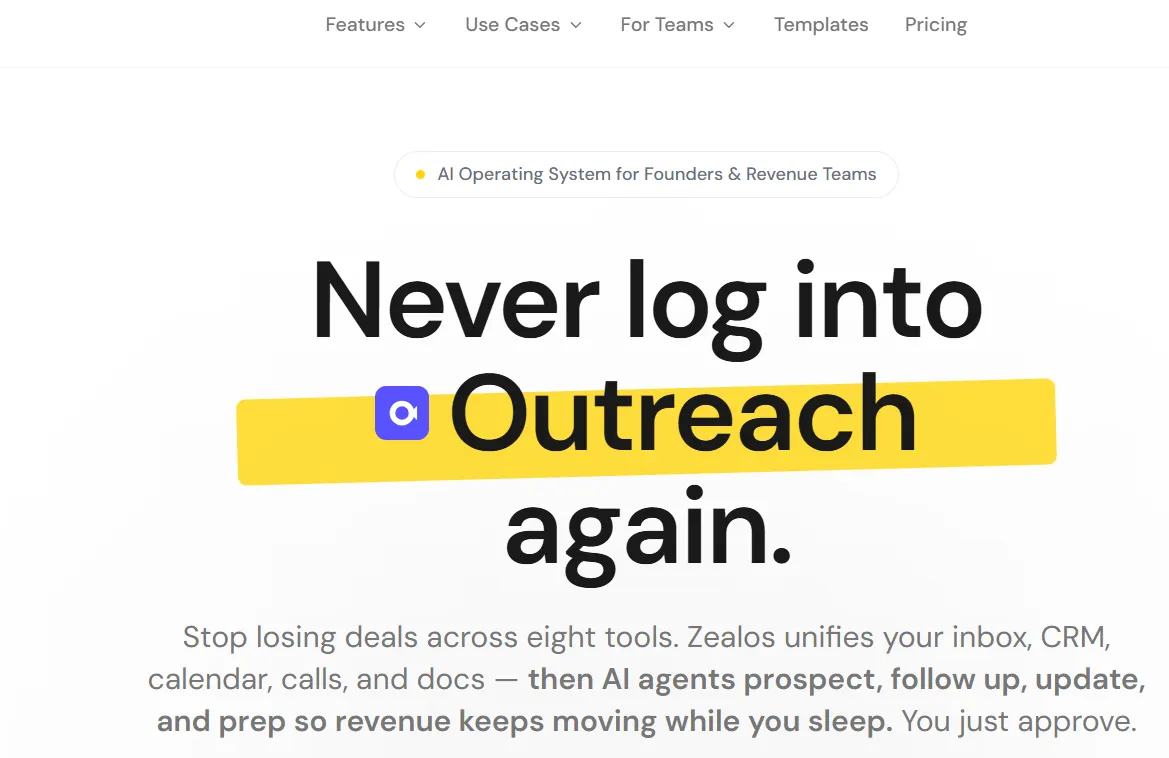
An AI layer over Gmail, Slack, HubSpot, and Salesforce that triages your inbox, preps you for meetings, writes up CRM records, and flags buying signals — built for B2B revenue teams doing their own selling.
Pricing: confirmed on Zealos's own pricing page as of 22 August 2026 — Core $49/user/month (2,500 AI credits/user/month), Prospect $99 (6,000 credits, marked "Most popular"), Execute $149 (12,000 credits), Enterprise custom (25,000+ credits). Plus a $349/month "AI Employees" add-on per bot. No free tier, just a 7-day trial on the three paid plans, and 20% off if you pay annually. The price has already risen once, from $29/month at its April 2026 launch.
Good fit: small B2B teams bottlenecked on selling time who already run HubSpot or Salesforce plus Gmail and Slack. Poor fit: pre-revenue solo founders, or compliance-sensitive teams needing SSO — that's Enterprise-only. Three months of operating history and no independent reviews yet, so treat it as a bet, not a sure thing.
Tettra — credible, if you clear the 10-user floor
What it actually does
An internal wiki with "Kai," an AI assistant that answers repetitive team questions inside Slack using retrieval over your verified docs, with citations back to source.
Pricing: $8/user/month on the Scaling plan, plus Enterprise for SSO/SCIM. 30-day free trial, no card required.
Good fit: Slack-first teams of 10–100 with genuinely recurring repeat questions — it holds roughly 91% satisfaction across 185 reviews. Poor fit: teams under 10 people (Notion is cheaper) or teams that aren't Slack-centric.
NeamX — capable thumbnails, aimed at the wrong metric
What it actually does
Generates YouTube thumbnails from a video title in under 60 seconds, compositing the creator's face and matching their channel's existing style.
Pricing: One-time packs, not subscriptions — Basic ₹999 (100 thumbnails), Plus ₹1,999 (200), Pro ₹4,999 (500). Roughly ₹10 per thumbnail across tiers; higher tiers add features, not cheaper units.
Good fit: creator-led channels publishing weekly or more with click-through under 2%. Poor fit: occasional publishers, or anyone with a working Canva template and a decent CTR already. Worth noting: YouTube's Test & Compare tool judges thumbnails on watch time, not clicks — so "click-optimized" is arguably the wrong target to begin with.
Expertise AI — real capability, real compliance exposure
What it actually does
Identifies anonymous B2B visitors on your website (formerly Chatsimple), scores their buying intent, engages them through chat, WhatsApp, Messenger, or Instagram, and books meetings without a human in the loop.
Pricing: confirmed directly on Expertise AI's own pricing page as of 22 August 2026 — this is a correction from an earlier third-party estimate of ~$500/month, which was wrong. The actual AI Agent line runs Free Preview ($0/month, 1 agent, 10 conversations), Business ($2,000/month, unlimited conversations, visitor intelligence, HubSpot integration), and Enterprise (custom, SSO, Salesforce/Marketo integrations). A separate, cheaper "Expertise Assistant" product exists at $40/user/month, but that's an internal work-assistant tool, not the visitor-identification product described here — don't confuse the two when you're pricing this out.
Good fit: B2B companies with substantial inbound traffic, a small sales team, and legal sign-off on data practices — HubSpot users especially, and ones who can justify a genuine $2,000/month line item. Poor fit: low-traffic sites, consumer-facing businesses, anyone expecting the ~$500/month figure that circulates online, or any team that already doesn't follow up on the leads it has.
One more thing worth knowing before you commit $2,000/month: independent review volume is thin. G2 itself notes there aren't enough reviews yet to generate reliable buying insight, and Trustpilot has nothing substantial either. What's there reads positively, but a small sample of mostly-positive reviews isn't the same as a track record — ask for references from customers your size before signing.
Potions — fairly priced for what it replaces, if you read past the headline
What it actually does
A done-for-you newsletter service — a team of AI plus human writers interviews you, drafts a weekly newsletter in your voice, you approve it in about 15 minutes a week, and they handle sending and list hygiene.
Pricing: Starter $169/month, Teams $242/month, Power custom. List growth is billed separately at $2 per engaged subscriber with a $500/month minimum.
Good fit: B2B SaaS companies, consultants, and agencies that need consistent channel content and don't have a writer to spare. Poor fit: personal-brand creators whose audience follows them specifically for their own voice, and anyone under roughly $2,000/month in revenue. It's priced sensibly against an agency — about a tenth of the cost — but the product is consistency, not necessarily prose you'd have written yourself.
How to read any pricing page in this category
All five of these tools share a pattern worth naming, because it isn't unique to them — it's how most B2B software aimed at founders is priced now. The headline number gets you in the door; a second variable, disclosed further down the page or not at all, decides what you actually pay.
The four places the real cost hides
Seat minimums. Tettra's $8/user rate assumes 10 users whether you have them or not. Before comparing a per-seat price across two tools, multiply by your actual headcount and by whatever minimum the vendor enforces — the sticker price is meaningless until you do that arithmetic.
Usage-based add-ons. Potions' newsletter fee looks complete at $169/month until list growth is billed separately. Ask directly: "what is the total bill for a customer who uses this the way I intend to use it?" — not the entry-tier bill.
Aggregator numbers that don't match the vendor's own page. Third-party summaries had Expertise AI at roughly $500/month; its own pricing page currently lists a $2,000/month Business tier. Zealos publishes tiers too, but the one that fits your actual workflow is rarely the cheapest one shown. When a secondhand summary and the vendor's own site disagree, trust the vendor's site and check the date the summary was written.
Output quality vs. output quantity. NeamX sells thumbnail generations, not usable thumbnails. Any tool billing by generation, credit, or attempt rather than by verified result deserves the same question: what's the realistic yield, not the theoretical maximum?
None of this means these tools are overpriced for what they do — Tettra's structural constraint is knowable in advance, and Potions is still roughly a tenth of an agency's cost even at its real floor. The point is simpler: read the pricing page the way you'd read a lease, not an advertisement, and get the actual per-month number before you evaluate whether the product is worth it.
Frequently Asked Questions
What does Zealos actually cost per month?
Core is $49/user/month, Prospect $99, Execute $149, with an Enterprise tier and a $349/month AI Employees add-on. There's no free tier, only a 7-day trial, and the price rose from $29/month at its April 2026 launch.
Is Tettra's $8/user pricing accurate for a small team?
Not for teams under 10 people. Tettra enforces a 10-user minimum, so a 4-person team pays $80/month regardless — a real per-head cost of $20, 2.5x the advertised rate.
Does NeamX have a free trial?
It's unclear, and that's worth knowing on its own. The pricing page's FAQ asks "can I try NeamX for free?" without a visible answer, and the homepage runs a "$7/mo" promo that doesn't match the ₹999 one-time credit pack shown on the pricing page. Confirm directly with support before paying. Separately, generation count isn't usable-thumbnail count: expect roughly 1 keeper per 5–10 attempts.
How much does Expertise AI actually cost?
Its own pricing page lists a free preview tier (1 agent, 10 conversations), a $2,000/month Business tier with unlimited conversations and visitor identification, and custom Enterprise pricing. That's considerably more than the ~$500/month figure that circulates in some third-party summaries — verify directly on their site rather than trusting an aggregator.
What's the real risk with Expertise AI's visitor identification?
Person-level identification — names, emails, LinkedIn profiles tied to anonymous site visitors — is personal data with real compliance exposure under GDPR and CCPA (up to $7,500 per intentional violation under CCPA). The vendor holds SOC 2 Type 1/2 and SOC 3 certifications plus a Data Processing Agreement, which covers their own security practices — it doesn't automatically cover whether your specific use of the identified data complies with your obligations. Company-level identification is far safer but less powerful.
Why is Potions more expensive than its $169/month headline price?
List growth is billed separately at $2 per engaged subscriber with a $500/month minimum, which pushes the real floor to about $669/month if you want the list to grow, not just the newsletter written.
Verdict
🏆 Our take
Read the pricing page for each of these twice — once for the headline number, once for what triggers the fine print. Zealos and Tettra both have real per-seat minimums that change the math for very small teams. NeamX and Potions both understate the effort or spend required to get to a usable result. Expertise AI is the one with a compliance dimension that deserves a conversation with whoever owns your legal risk before you sign up, not after.
Running one of these at a company right now? I'd like to hear the real numbers — actual usage and actual bills are worth more than another pricing-page recap.