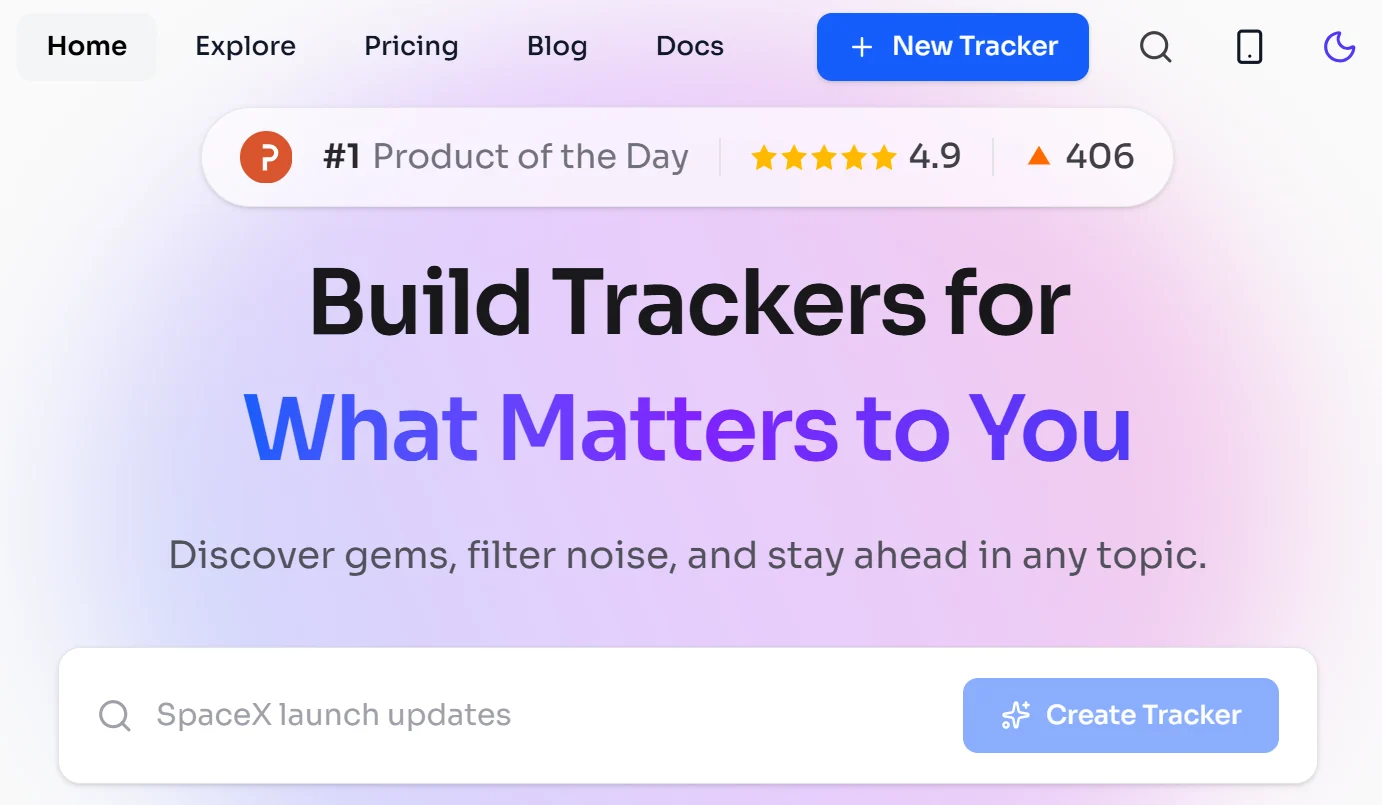
Sound familiar? You've got goals scattered across your head, three different phone apps, a stack of sticky notes, and a spreadsheet you haven't opened in six weeks. There are habits you want to build, projects you want to finish, health targets you keep meaning to reach, and financial milestones that stay perpetually vague. The problem isn't motivation — it's that there's no single place where all of it comes together in a format you actually check. NBot was built for exactly that gap. It lets you create custom trackers for anything that matters to you and brings every metric, milestone, and progress point into a single organized view. This review breaks down exactly what NBot does, how it works, who it genuinely serves, and why it's different from the wave of pre-packaged tracking apps that have filled app stores in recent years.
What Is NBot?
NBot is a personal and collaborative tracking platform built on one powerful idea: the best tracker is the one you design yourself. Most productivity and tracking apps arrive pre-built with a fixed set of categories. A fitness app tracks workouts. A habit app tracks daily check-ins. A project tool tracks tasks. Each one works reasonably well within its lane — and falls apart the moment you want to track something that doesn't fit neatly into the developer's vision of what matters.
NBot takes a fundamentally different approach. Rather than deciding for you what's worth monitoring, it gives you the building blocks to define your own tracking frameworks. You choose what to track, how frequently, what counts as progress, and when you want to receive alerts or summaries. The result is a platform that can serve as a habit tracker for someone building morning routines, a project dashboard for a freelance developer managing multiple clients, a health monitoring system for someone tracking medication schedules, and a learning progress tool for a student working through a new subject — all at the same time, in the same place.
And here's the thing: it's accessible without being shallow. You don't need technical skills to get started, but the system has enough depth to accommodate genuinely complex tracking needs as they evolve. Low barrier to entry, room to grow — that combination is what makes NBot appealing across a wide range of users and use cases.
Why Personal Tracking Matters More Than Ever in 2026
We're living in an era of unprecedented distraction and equally unprecedented opportunity. The same devices that help you stay organized are constantly pulling your attention elsewhere. The average person is managing more parallel commitments — work projects, personal goals, health routines, learning initiatives, financial plans — than at any previous point in history. The mental overhead of keeping track of all of it is genuinely significant.
There's solid research behind the value of tracking. When you measure something consistently, you create a feedback loop that changes behavior. Athletes track performance metrics because visibility drives improvement. Finance professionals track spending because the act of recording makes the patterns undeniable. Even in everyday life, simply writing down a goal and reviewing it regularly meaningfully increases the probability of achieving it. The mechanism is straightforward: measurement creates awareness, awareness creates accountability, and accountability changes what you actually do.
The problem has never been that tracking is useless — it's that the friction involved in setting up and maintaining tracking systems causes most people to abandon them quickly. Spreadsheets require manual updating and real discipline to maintain. Generic apps impose a structure that often doesn't match what you actually need to monitor. Custom-built solutions require technical skills most people don't have and time most people can't spare.
NBot addresses the friction problem without sacrificing flexibility. Setup takes minutes rather than hours. The ongoing maintenance is lightweight because the system is designed to fit into your existing workflow rather than demanding you restructure your life around it. And because you define what gets tracked, the system stays relevant even as your goals and priorities evolve.
Key Features of NBot
Here's what NBot actually offers at a concrete feature level — the fastest way to assess whether it matches what you're looking for.
- Custom Tracker Builder: The core of NBot is its tracker creation interface. You define each tracker from scratch — naming it, specifying the metric being measured, setting check-in frequency, and configuring what progress looks like. No rigid templates forcing you into predefined formats.
- Flexible Data Entry: Trackers accept different types of input depending on what you need to record. Numeric values for things like steps walked or hours studied, yes/no completions for daily habit check-ins, notes for qualitative reflection, or custom scale ratings for energy levels or mood tracking.
- Automated Notifications and Alerts: NBot can send reminders at set intervals, alert you when you hit a milestone, warn you when you fall behind a target, or send daily and weekly progress summaries. These work quietly in the background and are configurable so they feel genuinely helpful rather than intrusive.
- Progress Dashboards: All your trackers appear in a unified dashboard with visual indicators of current status, streaks, completion rates, and trend lines. Seeing everything in one place makes the cumulative picture of your progress far clearer than checking individual apps in isolation.
- Goal Milestones: For longer-term goals, NBot lets you set intermediate milestones that break the bigger picture into manageable stages. This prevents the psychological trap of only measuring yourself against an endpoint that feels impossibly distant.
- Team and Shared Trackers: Individual use is the primary mode, but NBot also supports collaborative tracking for teams, study groups, and organizations. Shared trackers let multiple contributors log updates against the same goal, making group accountability visible and concrete.
- Data Export and Reporting: Progress data can be exported in standard formats for further analysis, reports, or archiving. For professionals tracking business metrics, this interoperability with other tools matters considerably.
- Cross-Device Access: Trackers are accessible from any device with internet access — log a workout from your phone, check a project milestone from your desktop, review a weekly summary from wherever you are.
How NBot Works
The mechanics of NBot are simpler than the flexibility it provides might suggest. At its foundation, the platform operates on a straightforward loop: you define what matters, you record inputs against that definition at regular intervals, and the system surfaces patterns and progress in a format that informs your next action.
When you create a new tracker, you're essentially answering a series of questions: What are you monitoring? How often does it need to be updated? What does success look like at different stages? Who needs to see this data — just you, or a team? Should anything trigger an automatic alert? Once you answer those questions through the tracker builder interface, NBot takes over the organizational and notification layer. You don't have to think about it again until you sit down to log an update or review progress.
The notification system works on top of this foundation. Rather than a generic daily reminder that quickly gets dismissed as background noise, NBot's alerts are tied to the specific structure of each tracker. If you set a daily hydration goal and miss two consecutive days, the system can surface a reminder calibrated to that specific tracker and that specific gap — not a generic productivity ping that could mean anything.
And under the hood, the platform aggregates your input over time and presents it as trend data. This is where the real insight emerges. A single day's data point tells you almost nothing. Thirty days of consistent input reveals patterns — the days of the week where you consistently underperform, the categories where your progress outpaces your goals, the habits that are genuinely sticking versus the ones that only survive a burst of initial motivation. That pattern-level visibility is what separates a tracking tool from a simple to-do list.
Getting Started with NBot: A Step-by-Step Guide
Getting set up is deliberately straightforward. Here's what the process looks like from first visit to first active tracker.
Step 1 – Create Your Account: Head over to nbot.ai and sign up with an email address or link an existing Google account. The initial setup asks a few questions about what you primarily want to track — this helps suggest relevant starting points, though you're not locked into them.
Step 2 – Define Your First Tracker: Choose what you want to monitor. Give it a specific name — "Write 500 words per day" is more actionable than "be more productive." Define the input type, the frequency, and any target values. If it helps, start with something you already informally track so you can see immediately how the system works.
Step 3 – Configure Notifications: Decide how and when you want NBot to check in with you about this tracker. A daily reminder at a time that fits your routine is a solid starting point. As you get familiar with the system, you can layer in milestone alerts, trend summaries, and accountability nudges.
Step 4 – Log Your First Entry: Enter your first data point. This sounds trivial but it's important — it confirms the tracker is working as you intended and gives you immediate feedback on whether the setup matches how you actually want to record progress. Adjust the structure now, before you have weeks of data rather than after.
Step 5 – Expand to Additional Trackers: Once your first tracker is running smoothly, add others. The most effective approach is to introduce trackers gradually rather than creating a dozen at once. Each tracker you add requires a small behavioral change — logging the update — and adding too many simultaneously creates friction that can cause you to abandon the whole system.
Step 6 – Review Your Dashboard Regularly: Schedule a regular time — weekly works well for most people — to look at your full dashboard and assess where you stand across all active trackers. This review is where the platform delivers its highest value, because the patterns that emerge over multiple weeks are far more informative than any individual daily check-in.
Real-Life Use Cases for NBot
The flexibility of a platform like NBot is best understood through the specific situations where it creates real, practical value. Here are several concrete scenarios that illustrate how different users put it to work.
The Freelancer Juggling Multiple Client Projects
A freelance content strategist working across four ongoing client retainers simultaneously — each with different deliverable schedules, revision cycles, and communication expectations — uses NBot to create a dedicated tracker for each client. She logs deliverables completed, hours worked, feedback rounds, and billing status. The weekly dashboard gives her a clear view of where each project stands without opening four different tools or digging through email to reconstruct the current state of each relationship. When one project starts running behind, the trend data surfaces the issue early enough to adjust before a deadline gets missed.
The Graduate Student Monitoring Study Habits
A PhD student in his second year tracks daily reading hours, writing output in words per day, and the number of research papers reviewed per week. He uses NBot's streak feature to maintain momentum through difficult stretches of research and the trend visualization to identify the times of week when his output consistently drops — which turns out to be Monday mornings, a pattern he hadn't consciously noticed before. Adjusting his schedule to front-load lighter work on Mondays and reserve deep writing sessions for mid-week improves his weekly output measurably. That's the kind of insight that only surfaces when you've been tracking consistently for a while.
The Person Building Health and Wellness Routines
A professional in her mid-thirties recovering from a period of burnout wants to rebuild healthy daily habits without the pressure of a rigid fitness program. She creates trackers for sleep duration, water intake, daily walks, and a ten-minute journaling practice. The low-stakes format — logging a yes or a number takes fifteen seconds — removes the psychological friction that caused her to quit more elaborate health apps in the past. Six weeks in, the dashboard shows a clear correlation between days with longer sleep and days with higher journaling completion rates — a connection she wouldn't have identified without the data.
The Small Business Owner Tracking Key Metrics
A founder running a small e-commerce operation tracks weekly revenue, customer acquisition numbers, support ticket volume, and inventory reorder triggers — all in NBot. Rather than pulling reports from four different platforms every Monday morning, the NBot dashboard gives him a single-view summary of where the business stands. Custom alerts notify him immediately when ticket volume spikes beyond a threshold he's set, so he can investigate potential product issues before they escalate into a customer experience problem.
The Team Running an Accountability Sprint
A remote team of six working toward a quarterly product launch uses NBot's shared tracker feature to create group visibility into individual commitments. Each team member logs daily progress against their own deliverables. A shared dashboard shows the full team's completion rate in real time. This shared visibility creates a mild but effective form of peer accountability — not surveillance, but transparency — that keeps the project moving even across different time zones.
Benefits of Using NBot
The advantages of a flexible tracking platform like NBot go beyond the features themselves. They emerge from how those features change your relationship with your own goals over time.
The most immediate benefit is clarity. The moment you externalize a goal into a structured tracker with a defined metric and a regular check-in schedule, it shifts from being a vague intention floating in your head to a concrete commitment with visible progress. That shift changes behavior — not dramatically overnight, but consistently over weeks and months in ways that compound into meaningful results.
The second benefit is the consolidation of attention. Managing multiple priorities across multiple apps creates a cognitive overhead that accumulates across the day. Knowing that your habits, your project milestones, your health metrics, and your financial targets are all in one place — and that you've got one review session per week to assess all of it — removes the background anxiety of wondering which ball you might be dropping at any given moment.
The third benefit is the pattern intelligence that comes from consistent tracking over time. Most people have a pretty poor intuitive sense of their own patterns. You might believe you're most productive in the mornings, but your data might tell a different story. You might feel like you're staying on track with a goal, but the trend line might show a gradual decline over several weeks before you consciously notice it. Objective data, accumulated consistently, is a more reliable guide than memory and intuition alone.
And finally, the accountability effect of an active tracking system is real and well-documented. When you've committed to logging progress on something every day, the act of not logging it becomes a conscious decision rather than an unconscious drift. That added moment of awareness is often enough to change the outcome in the marginal cases where motivation is uncertain — which, over weeks and months, makes a significant cumulative difference.
NBot for Individuals
For individual users, NBot works best as a flexible personal operating system for goal management. Most adults have goals in several life domains simultaneously — career advancement, physical health, relationships, creative projects, financial security, personal development — and the challenge isn't setting those goals but maintaining consistent progress on all of them without letting any one domain crowd out the others.
NBot handles this by making it easy to maintain a broad portfolio of light-touch trackers rather than committing to one intensive system. A tracker that takes thirty seconds to update is one you'll actually update. The platform's design keeps the daily logging overhead minimal so the system remains sustainable over the long periods — months and years, not just weeks — where meaningful progress in most domains actually occurs.
For people new to systematic goal tracking, the platform also serves as a useful feedback mechanism for calibrating ambition. Setting a target and measuring yourself against it consistently reveals quickly whether the goal was realistic, too easy, or genuinely challenging. That calibration data is valuable for setting more accurate targets going forward.
NBot for Students
Students face a specific version of the tracking challenge. Academic progress is often measured in infrequent, high-stakes assessments — exams and papers — which means the feedback loop between effort and outcome is slow and sometimes misleading. Students who appear to be keeping up right until they suddenly don't are often those who had no reliable way of monitoring their own learning progress between assessments.
NBot addresses this by enabling students to track the leading indicators of academic success rather than just the lagging results. Pages read per day, practice problems completed, writing sessions logged, and review cycles completed are all trackable inputs that predict exam performance far better than last-minute self-assessment the week before a test. A student who tracks these inputs consistently has better visibility into whether they're genuinely on pace or quietly falling behind.
Beyond academics, students using NBot for personal development goals — building a new skill, improving fitness during a semester, managing a part-time job alongside studies — benefit from the same consolidation advantage. One platform covering academic and personal tracking keeps the system simple enough to actually maintain through the variable rhythms of student life.
NBot for Professionals
For working professionals, the value proposition shifts slightly toward workflow optimization and performance visibility. Professionals in goal-driven roles often have a defined set of key results they're expected to deliver — revenue targets, project completion metrics, customer satisfaction scores, team productivity benchmarks — and the challenge is maintaining clear real-time visibility into progress against those targets without a cumbersome reporting overhead.
NBot supports this use case well for individual contributors who want personal visibility into their own performance metrics outside of whatever formal reporting their organization uses. Rather than waiting for a quarterly review to understand how they performed, professionals using NBot can see their own trend data on a weekly basis and identify areas of underperformance before they become visible to managers or stakeholders.
For professionals in creative or independent roles — writers, designers, consultants, coaches — NBot's flexibility is particularly valuable because the metrics that matter most often don't fit into standard corporate performance frameworks. A consultant might track proposal conversion rates, client satisfaction scores, and billable hours simultaneously. A designer might track portfolio projects completed, client revision cycles, and revenue per project. These custom metrics require a custom tracking framework — which is exactly what NBot provides.
NBot for Teams and Organizations
At the team level, NBot's shared tracking features create a coordination and accountability layer that works alongside — not replacing — the project management tools most teams already use. That distinction matters: NBot isn't trying to be a full project management platform. It's a lightweight overlay that makes collective goal visibility accessible without the overhead of enterprise software.
Small teams — startup product squads, agency project groups, nonprofit program teams — often find that heavyweight project management tools create more administrative burden than they resolve. NBot's shared trackers provide the most essential element: a clear answer to "where do we stand right now?" across the metrics the team actually cares about, with the flexibility to define those metrics themselves rather than fitting them into a predefined template.
For organizations running time-limited initiatives — a launch sprint, a fundraising campaign, a quarterly goal cycle — NBot's milestone and progress visualization features help maintain momentum and visibility throughout the effort. The dashboard becomes a shared reference point every team member can check, which reduces the meeting overhead required to keep everyone aligned on current status.
Custom Tracking Possibilities
The breadth of what NBot can track is honestly one of its most compelling characteristics. Rather than listing all the possibilities abstractly, here's a concrete sense of the range of things users actually build trackers for on platforms like this.
| Category | Example Trackers | Typical Metric Type |
|---|---|---|
| Health & Fitness | Steps per day, sleep hours, water intake, workout sessions | Numeric / Yes-No |
| Learning & Skills | Pages read, practice hours, lessons completed, vocabulary words | Numeric / Count |
| Habits & Routines | Morning routine, journaling, meditation, screen-free evenings | Yes-No / Streak |
| Financial Goals | Monthly savings, spending per category, investment contributions | Numeric / Target |
| Creative Projects | Words written, designs published, recordings completed | Numeric / Milestone |
| Business Metrics | Revenue, client calls, proposals sent, customer reviews | Numeric / Percentage |
| Personal Growth | Gratitude notes, mood ratings, social connections made | Scale / Notes |
| Project Tracking | Tasks completed, milestones hit, deliverables reviewed | Milestone / Percentage |
This range illustrates something important: NBot isn't most useful for any single one of these categories in isolation. Its real value shows up when you need tracking across multiple domains simultaneously and want a single system that handles all of them rather than a fragmented collection of specialized apps.
Productivity and Accountability Advantages
The productivity benefits of consistent tracking are well-supported by behavioral research, but they require some nuance to apply correctly. Tracking isn't inherently motivating — poorly designed tracking systems can actually reduce motivation by creating measurement anxiety or by generating data that feels disconnected from real outcomes. Well-designed tracking, by contrast, creates a feedback environment where progress is visible and actionable.
NBot's approach leans toward the latter by keeping the measurement overhead low and the insight quality high. The daily input asks very little of you — fifteen to thirty seconds per tracker, no elaborate ritual required. The output — trend lines, streak data, completion rates over time — is meaningful enough to inform real decisions about how to spend your effort going forward.
The accountability dimension works at both individual and social levels. For solo users, the accountability is internal: you've committed to tracking something, and the system makes it visible whether you followed through. For users of shared trackers, the accountability has a social layer — your teammates can see your contributions to shared goals, creating a mild but effective form of peer accountability that's entirely voluntary and transparent rather than imposed or covert.
Long-term, consistent users of tracking systems also report a secondary productivity benefit: improved goal calibration. After six months of tracking a goal consistently, you've got objective data about your own pace and capacity. That data makes you significantly better at setting realistic goals for the next six months — which is a compounding improvement in planning accuracy that saves time and reduces the frustration of consistently missing targets that were poorly calibrated to begin with.
Privacy and Data Control Considerations
Any platform that stores personal goal and performance data deserves a thoughtful look at its privacy practices before you commit to using it long-term. The data NBot accumulates over months of use is a detailed picture of your habits, health, finances, work performance, and personal development — a profile that has real value and real sensitivity.
The questions worth asking before building a long-term tracking relationship with any platform in this category:
- Data Storage Location: Where is your tracking data stored, and under which jurisdiction's privacy laws does it fall? For users with strong privacy requirements, knowing whether data lives on servers in regions with robust data protection regulations matters.
- Data Retention Policy: How long does the platform keep your data if you stop using it or delete your account? A clear commitment to data deletion upon account closure is a meaningful signal of a privacy-conscious approach.
- Third-Party Sharing: Does the platform share or sell any data — even in aggregated form — to advertisers, analytics partners, or data brokers? Free services without a clear revenue model are more likely to monetize user data than platforms with transparent subscription pricing.
- Account Security: Does the platform support two-factor authentication? Can you see and manage active sessions? Is there an account activity log? These features indicate a platform that takes user security seriously.
- Data Export Rights: Can you download your own tracking data in a portable format at any time? The ability to export your data protects you from platform dependency and gives you control over your own historical records.
"A tracking platform you trust with your goals and daily data should earn that trust through transparent policies, strong security practices, and genuine respect for your control over your own information."
None of these considerations should be automatic dealbreakers — they're the right questions to ask and verify before committing. A platform that answers them clearly and positively is one you can use with confidence over the long term.
Comparison with Traditional Tracking Methods
Before platforms like NBot existed, people tracked goals and habits through a range of approaches that still have their advocates — and for good reason. Each has genuine strengths and real limitations worth understanding in comparison.
Physical journals and paper planners remain the tracking method of choice for a lot of people, and understandably so. Paper has no notifications, no battery drain, no technical dependencies, and a tactile quality that many people find genuinely helpful for focus and reflection. The limitation is that paper gives you no trend analysis, no automated reminders, no collaborative visibility, and no data portability. Your progress is in the notebook, and the notebook is only useful if you carry it everywhere and review it consistently.
Spreadsheets are the step up from paper for technically inclined users. A well-built spreadsheet can provide visualization, formula-driven trend analysis, and data portability in ways that paper can't. The limitation is that building and maintaining an effective tracking spreadsheet requires meaningful time investment and ongoing discipline. Most people's tracking spreadsheets start well and gradually decay as the maintenance burden accumulates and life gets in the way. You know this is true.
Purpose-built single-category apps — fitness trackers, habit apps, financial tools — are polished and optimized for their specific domain but create fragmentation when you have tracking needs that span multiple life areas. A person seriously monitoring their health, learning progress, project work, and financial goals simultaneously needs to maintain four separate apps, each with its own interface, its own data format, and its own notification system. The overhead of that fragmented approach is real and accumulates over time.
NBot's advantage is consolidation without sacrifice. It replaces the fragmented multi-app approach with a single flexible system without limiting what you can track or imposing a structure that doesn't fit your actual life. The trade-off compared to paper is the technical dependency and privacy considerations; the trade-off compared to specialized apps is that very deep domain-specific analytics in any single category may not match the depth of an app built exclusively for that purpose.
Tips to Get the Most Out of NBot
Getting value from any tracking system requires more than just setting it up. Here are practices that consistently separate users who see meaningful results from those who set up trackers and gradually stop checking them.
- Start with three trackers, not fifteen. The temptation when first setting up a flexible system is to track everything simultaneously. Resist this. Start with the three areas of your life where you most want to build momentum. Once those are running consistently — two to three weeks of daily logging without dropping — then add more.
- Tie tracker check-ins to existing habits. The most reliable way to build a new behavior is to attach it to something you already do consistently. Log your NBot updates right after your morning coffee, before you close your laptop at the end of the workday, or as part of a Sunday evening weekly review. The existing behavior becomes a trigger for the new one.
- Review the dashboard weekly, not just the individual trackers. The dashboard view across all your trackers is where the real insight lives. Individual daily logs tell you how you did today. The dashboard tells you how this week compared to last month and whether you're actually trending toward your goals or away from them.
- Adjust targets as you gather data, not before. Many people set ambitious targets upfront and quietly stop tracking when they consistently miss them because missing feels discouraging. A better approach: start with a baseline target you're confident you can hit, then adjust upward once you have actual performance data as a reference point.
- Use the notes feature to capture context. Numbers tell you what happened. Notes tell you why. On days where your performance was unusually good or unusually poor, a brief note — "hectic travel day" or "unusually focused morning" — makes the trend data far more interpretable in retrospect than raw numbers alone.
- Archive rather than delete trackers you pause. If you need to deprioritize a tracker temporarily, archive it rather than deleting it. The historical data has value for future goal-setting and for returning to that area with context about where you left off.
Common Mistakes to Avoid
The patterns that cause people to abandon tracking systems are consistent enough that they're worth naming directly so you can avoid them from the start.
The most common mistake is setting metrics that are too abstract to measure clearly. "Be healthier" isn't trackable. "Complete a 30-minute walk four times per week" is. The more precisely defined the metric, the easier it is to log consistently and the more meaningful the trend data becomes over time. If you find yourself uncertain how to log a given day's progress, the tracker definition needs to be sharpened.
The second common mistake is expecting the tracking system itself to generate motivation. NBot provides visibility, structure, and accountability — it doesn't manufacture the desire to pursue a goal you're ambivalent about. If you set up a tracker for something you think you should want rather than something you genuinely do want, the system will accurately reflect your actual engagement with it, which tends to be low. The tool amplifies commitment; it doesn't substitute for it.
The third mistake is treating a missed day as a system failure. Every tracking system has gaps. Life is irregular, and the expectation of perfect daily logging is a recipe for abandoning a tracker entirely after the first disruption. A missed day or a bad week is data, not a verdict. Return to the tracker, note the gap if helpful, and continue. The value of a tracking system comes from the weeks and months of aggregate data, not from any individual day's perfect performance.
And finally, avoid the temptation to over-engineer your tracker setup with excessive automation and nested notification logic before you've experienced the platform in practice. Simple setups run longer than elaborate ones by default. Build complexity gradually, as your understanding of what you actually need becomes clearer through experience.
The Future of Personal Tracking Automation
The trajectory of personal tracking tools is pointing toward significantly greater automation and intelligence over the next several years. First-generation tracking platforms required users to log every data point manually. The second generation added integrations with devices and services — fitness wearables, calendar apps, financial accounts — that automatically contributed data to relevant trackers. The emerging third generation is beginning to use AI-driven analysis to move beyond recording what happened toward interpreting why it happened and predicting what's likely to happen next.
For a platform like NBot, this trajectory suggests several directions. Automated data ingestion from connected devices — smartwatches, health monitors, connected calendars — would reduce the manual logging overhead to near zero for many tracker categories. Intelligent milestone recognition, where the system identifies patterns in your data and surfaces insights you might not have noticed on your own, would make the analytics layer significantly more valuable. And predictive alerts — flagging when your current trajectory suggests you'll miss a target before the miss actually occurs — would shift the system from reactive to genuinely proactive.
The broader cultural context also matters here. As AI tools become more deeply integrated into daily work and life, the ability to manage and direct AI assistance effectively becomes increasingly important. Tracking tools play a natural role in this shift — they provide the data layer that makes AI assistance personalized and relevant rather than generic. A tracking system that knows your work output patterns, your health metrics, your learning progress, and your financial situation is well-positioned to generate genuinely useful AI-driven recommendations. That integration is where personal tracking platforms like NBot are most likely to expand their value over the coming years.
The demand side of this equation is also growing. As people manage more parallel commitments and more complex personal and professional goals, the cognitive value of having a reliable external system to track progress becomes more, not less, significant. Tools that reduce that cognitive overhead effectively will continue to find a large and growing audience.
Frequently Asked Questions About NBot
What is NBot?
NBot is a personal and collaborative tracking platform that lets individuals, students, professionals, and teams build customized trackers for virtually any goal, habit, metric, or workflow — without requiring any coding knowledge. It's designed to give users full control over what they track, how they track it, and how they receive updates or alerts about their progress. Unlike single-purpose tracking apps, NBot accommodates multiple tracking needs across different life and work domains within a single unified system.
Is NBot free to use?
NBot typically offers a free tier that provides access to core tracking features with a limited number of active trackers. Premium plans unlock additional trackers, advanced automation features, team collaboration tools, data export capabilities, and priority support. The specific pricing tiers and current plan details should be verified directly on the NBot platform, as pricing in this category evolves and any third-party listing may not reflect the most current offer. Checking for a free trial period before committing to a paid plan is always a sensible approach.
Who should use NBot?
NBot works well for students tracking learning goals and study habits, professionals monitoring project timelines and work metrics, freelancers managing client deliverables and business performance, individuals building health and wellness routines, small teams coordinating shared goals, and anyone who wants a flexible, centralized system for monitoring progress across multiple areas of their life simultaneously. The people who benefit most are those who've found single-purpose apps too limiting or who are currently managing multiple disconnected systems and want to consolidate.
How secure is NBot?
Like any cloud-based platform storing personal data, NBot should implement industry-standard security measures including encrypted data transmission, secure authentication, and clear data handling policies. Before trusting any personal tracking platform with sensitive goal and performance data, you should review the service's privacy policy, understand what data is stored and how long it's retained, and confirm whether any data is shared with third parties. Using a strong unique password and enabling two-factor authentication where available significantly increases account security regardless of the platform's baseline protections.
Can I create fully custom trackers in NBot?
Yes. Custom tracker creation is one of NBot's core strengths and the primary characteristic that distinguishes it from pre-built tracking apps. You define each tracker from scratch — naming it, specifying the metric being measured, setting the input type, determining check-in frequency, and configuring alerts and milestone thresholds. There are no mandatory templates forcing you into predefined formats. This flexibility is what makes NBot capable of accommodating tracking needs that most purpose-built apps can't handle without significant workarounds.
Does NBot support automated tracking and notifications?
NBot includes automation features that let you configure scheduled reminders, milestone notifications, progress alerts, and summary reports without manual intervention each time. You can specify when and how you receive communications about each tracker, allowing the system to operate in the background and surface information at the moments when it's most useful. This automation layer is what turns NBot from a simple logging tool into an active accountability system that works for you even when tracking isn't at the front of your mind.
Can teams use NBot collaboratively?
NBot supports team-based tracking through shared tracker functionality that lets multiple users contribute to collective goals and view shared progress dashboards. Team members can log individual updates, see each other's contributions, and receive group notifications about shared milestones. This makes the platform useful beyond individual productivity for coordinating small teams, study groups, and organizations working toward defined collective outcomes. The shared visibility creates a lightweight accountability layer without the overhead of enterprise project management tools.
Is coding required to use NBot?
No coding knowledge is required. The platform takes a no-code approach to tracker creation and configuration, making it accessible to users regardless of technical background. Setting up a new tracker, configuring automation rules, and customizing dashboard views are all achievable through guided interfaces that walk you through each decision step by step. Advanced users who want to explore integration with other tools or API-level customization may encounter some technical options, but these are entirely optional and the core platform is fully usable without them.
What kinds of things can I track with NBot?
NBot accommodates a wide range of tracking needs. Common use cases include daily and weekly habits, fitness and health metrics, learning progress, project milestones, financial targets, business performance indicators, creative output, reading goals, travel planning, and any other measurable activity where monitoring progress over time adds value. The platform supports numeric values, yes-no completions, scale ratings, and qualitative notes as input types — giving it the flexibility to handle both quantitative and qualitative tracking needs effectively.
What makes NBot different from other tracking apps?
Most tracking apps are designed for a specific category — fitness, habits, project tasks — and work well within that category while falling short outside of it. NBot's distinguishing characteristic is breadth without sacrificing depth. Rather than confining you to predefined metrics, it provides a framework for tracking anything you define as meaningful, across any life or work domain. This makes it suitable for a far wider range of tracking needs within a single platform, significantly reducing the fragmentation and cognitive overhead that comes from maintaining multiple specialized apps simultaneously.
How do I know if NBot is right for me?
NBot is most likely the right tool if you recognize any of these situations: you currently track goals across multiple different apps or systems and want to consolidate, you've tried tracking before but abandoned it because the system didn't fit your actual life, you have goals in multiple life areas and want a single overview of progress across all of them, or you want automated reminders and alerts to your tracking without building something from scratch. If you only have one or two things to track and a specialized app already handles them well, NBot's flexibility may be more than you currently need — though it'll scale with you if your tracking needs expand.
Ready to Start Tracking What Actually Matters?
Join NBot and build your first custom tracker in minutes — no coding, no complexity, just clarity.
Get Started on NBot →Final Verdict
The problem NBot solves is real and far more common than it's openly discussed. Most people have a gap between their intentions and their outcomes that isn't explained by a lack of effort or motivation — it's explained by a lack of visibility. Goals that aren't tracked consistently tend to drift. Habits that aren't measured tend to slide. Projects that have no external accountability structure tend to stall. The solution isn't more willpower; it's a better system for making progress visible and keeping the gap between where you are and where you want to be in clear view.
NBot's strength is that it closes this visibility gap without imposing the rigid structure of single-purpose apps or demanding the technical skill of building a custom tracking system from scratch. The flexibility to define your own metrics, across any domain, with the automation and visualization support to make those metrics meaningful over time — that's a genuinely useful combination that most tracking tools don't offer.
The considerations worth holding alongside this recommendation are real. A tracking system is only as valuable as your commitment to using it. Privacy for personal goal data is worth thinking through before you commit. And the right number of trackers is probably fewer than you think at the start — starting small and expanding gradually is the approach most likely to produce a sustainable system rather than an elaborate one you abandon after a month.
But for anyone who's felt the frustration of good intentions not translating into consistent progress, NBot offers a practical framework for changing that pattern. The tool handles the organization and the accountability structure. The direction, the goals, and the daily decisions remain entirely yours.
Tracking isn't about perfection — it's about awareness. When you can see clearly where you are relative to where you want to be, the gap itself becomes your most honest and consistent source of motivation. That's what a well-built tracking system gives you, and it's what NBot is designed to deliver.